Stone Pros · Service
Concrete Polishing
in South Florida
Polished concrete floors for homes, businesses & industrial spaces
Professional concrete polishing across South Florida — transforming ordinary concrete slabs into polished, architectural surfaces. Using industrial diamond abrasives, lithium silicate densification, and premium sealers, we grind, hone, and polish concrete floors to achieve a smooth, durable, reflective finish. Available in cream, salt-and-pepper, and exposed aggregate finishes with custom staining options. Serving Miami-Dade, Broward, and Palm Beach Counties since 1997.
Understanding the Process
What Is Concrete Polishing?
Concrete polishing is a multi-step mechanical process that transforms a raw concrete slab into a smooth, dense, and reflective finished floor. Using industrial diamond abrasives — ranging from coarse grinding to ultra-fine polishing grits — the surface is progressively refined to the desired level of smoothness and sheen.
During the process, a lithium silicate densifier is applied to the concrete. This chemical reacts with the calcium hydroxide naturally present in concrete, filling the pores and permanently hardening the surface. The result is a floor that's abrasion-resistant, dust-proof, and more resistant to stains and moisture — all without the need for waxes, coatings, or topical sealers that wear down over time.
Unlike epoxy or other surface coatings, polished concrete is breathable — moisture vapor can escape rather than becoming trapped beneath the surface, preventing delamination. This makes it especially well-suited to South Florida's humid, subtropical climate.
Finish Options
Types of Polished Concrete Finishes
The level of aggregate exposure and gloss is determined during the grinding and polishing process. Here are the most common finish options.
Cream Finish
No aggregate exposure — a smooth, uniform surface showing only the cement paste. Ideal for modern, minimalist interiors.
Salt & Pepper
Light aggregate exposure with fine speckling of sand and small stones. The most popular choice for homes and retail spaces.
Exposed Aggregate
Full stone exposure revealing the concrete's natural gravel and aggregate. Bold, textured, and ideal for commercial and industrial settings.
Matte
A low-sheen, natural finish that's understated and contemporary. Great for high-traffic areas where glare reduction matters.
Satin
A soft, refined sheen that balances elegance with practicality. A versatile choice for homes, offices, and showrooms.
High-Gloss
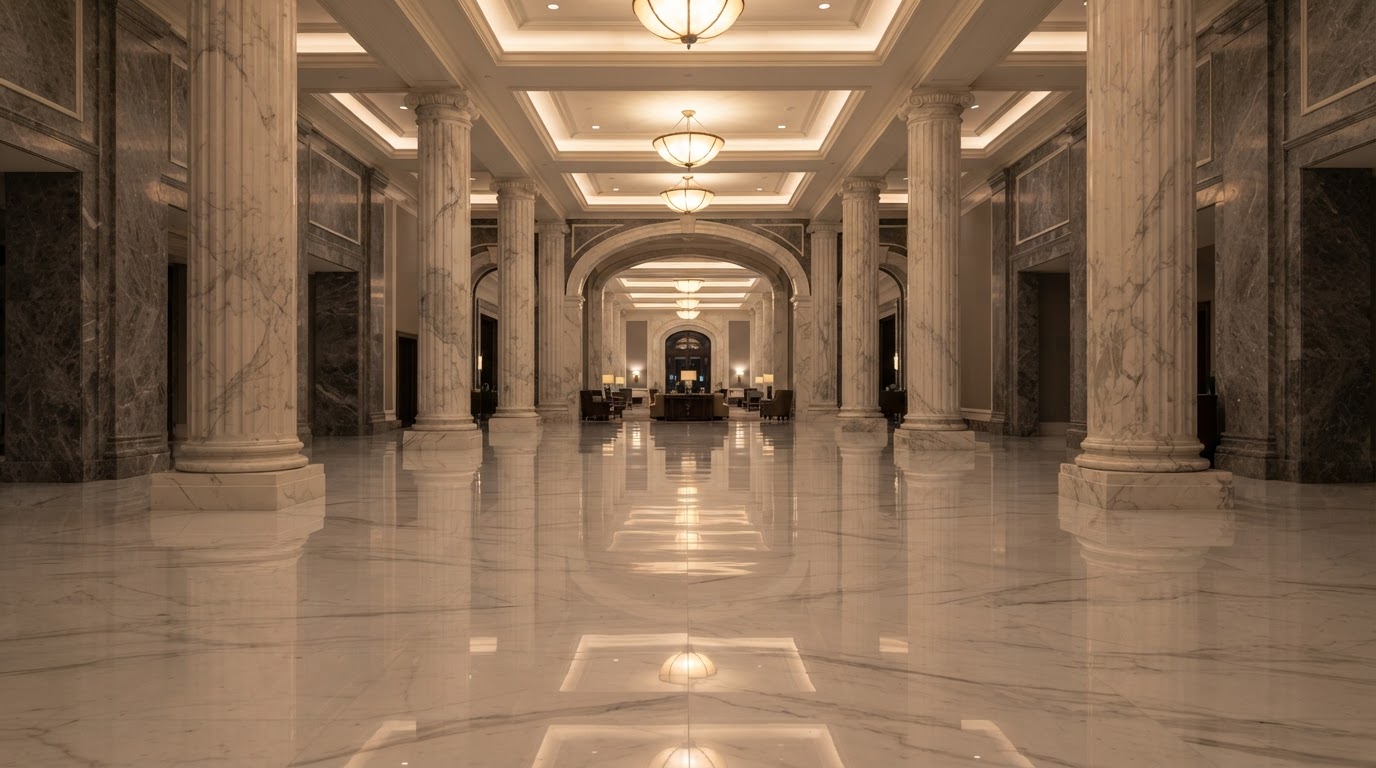
A mirror-like, reflective finish that maximizes light reflection and creates a dramatic, luxury appearance.
Our Approach
The Concrete Polishing Process
Surface Preparation
We assess the concrete slab for cracks, spalling, coatings, or moisture issues. Existing epoxy, glue, mastic, or thinset is removed. Cracks are repaired with color-matched epoxy, and joints are filled as needed to create a clean, uniform substrate.
Diamond Grinding
Using industrial-grade concrete grinders with progressive diamond abrasives, we cut through the surface to expose the desired level of aggregate — from a cream finish with no visible stone to a salt-and-pepper look or full exposed aggregate.
Densification
A lithium silicate densifier is applied to the concrete surface. It chemically reacts with the calcium hydroxide in the concrete, hardening the surface and making it denser, more abrasion-resistant, and dust-proof — critical for South Florida's humid climate.
Honing & Refining
Progressively finer diamond grits — from 200 through 800 grit — refine the surface, removing scratches left by coarser abrasives and building toward the desired sheen, from matte to satin.
Polishing & Sealing
Final polishing with 1500+ grit diamond abrasives achieves the target gloss level — matte, satin, or high-gloss. A premium penetrating sealer is applied to protect against oil, water, and stains while maintaining the concrete's natural breathability.
Why Choose Polished Concrete
Benefits of Polished Concrete
Exceptional Durability
Polished concrete is one of the most durable flooring options available — resistant to foot traffic, forklifts, and heavy equipment without chipping or peeling.
Low Maintenance
No waxing, coatings, or harsh chemicals needed. Routine damp mopping keeps polished concrete looking pristine for years.
Stain & Moisture Resistant
Densification and sealing make the surface resistant to oil, water, and chemical spills — essential in South Florida's humid climate.
Cost-Effective Long Term
Polished concrete uses the existing slab, eliminating the need for additional flooring materials. Lower lifetime cost than tile, carpet, or epoxy.
Improved Light Reflectivity
High-gloss polished concrete can increase ambient lighting by up to 30%, reducing energy costs in commercial and industrial spaces.
Eco-Friendly
No volatile organic compounds (VOCs), no coatings to replace, and no additional materials required. The existing concrete slab is the finished floor.
Customizable Appearance
Choose from cream, salt-and-pepper, or exposed aggregate finishes, with optional staining in light grey, charcoal, sand, or custom colors.
Slip-Resistant Options
Anti-slip additives can be incorporated during the polishing process, making polished concrete safe for wet areas like pool decks and kitchens.
Where It Works
Applications
Polished concrete is one of the most versatile flooring options — suitable for residential, commercial, and industrial environments.
Residential
- Homes & condos
- Garages & driveways
- Kitchens & living areas
- Patios & pool decks
Commercial
- Retail stores & showrooms
- Restaurants & cafes
- Hotel lobbies & corridors
- Office buildings & medical facilities
Industrial
- Warehouses & distribution centers
- Manufacturing facilities
- Automotive showrooms & service bays
- Food processing & cleanroom environments
Service Areas
Concrete Polishing in South Florida
We provide professional concrete polishing services across Miami-Dade, Broward, and Palm Beach Counties.
Questions & Answers
Concrete Polishing FAQ
What is concrete polishing?
Concrete polishing is a multi-step process that uses industrial diamond abrasives to grind, hone, and polish a concrete surface to the desired level of smoothness and sheen. A lithium silicate densifier is applied to harden the surface, followed by a penetrating sealer that protects against stains and moisture. The result is a durable, low-maintenance, reflective floor that uses the existing concrete slab.
How much does concrete polishing cost in South Florida?
Concrete polishing costs in South Florida typically range from $4 to $12 per square foot, depending on the slab condition, desired finish level (matte vs. high-gloss), aggregate exposure, square footage, and whether staining or joint repair is needed. Stone Pros offers free on-site estimates — call 954-914-9858 to schedule yours.
How long does polished concrete last?
With proper maintenance, polished concrete floors can last 20+ years. The densification process permanently hardens the concrete surface, and unlike epoxy or coatings, there's nothing to peel, chip, or reapply. Routine cleaning with a pH-neutral cleaner is all that's needed.
Can old or damaged concrete be polished?
Yes, in most cases. We assess the slab for cracks, spalling, and surface damage during the inspection. Cracks are repaired with color-matched epoxy, and minor surface imperfections are ground away during the preparation phase. Severely damaged concrete may require resurfacing before polishing can begin.
What is the difference between concrete grinding and concrete polishing?
Concrete grinding is the initial step — using coarse diamond abrasives to remove existing coatings, level the surface, and expose the desired aggregate. Concrete polishing is the full process that follows grinding, including honing with progressively finer grits, densification, and final polishing to achieve the target sheen.
Can concrete cracks be repaired before polishing?
Absolutely. We repair cracks, joints, and spalled areas with color-matched epoxy and filler before polishing begins. While repaired cracks may still be faintly visible, they're structurally sound and blend with the surrounding surface after polishing.
Can epoxy, glue, or mastic be removed before polishing?
Yes. Our surface preparation includes removing existing epoxy coatings, carpet glue, mastic, thinset, paint, and other contaminants using diamond grinding and specialized tooling. This ensures the concrete surface is clean and ready for polishing.
Is polished concrete slippery when wet?
Polished concrete can be slippery when wet, especially at higher gloss levels. We can incorporate anti-slip additives during the polishing process and apply non-slip sealers for areas like pool decks, kitchens, and entryways where moisture is common.
Is polished concrete good for homes?
Yes. Polished concrete is an excellent choice for South Florida homes — it's durable, cool underfoot, hypoallergenic, and resistant to humidity and moisture. It works well in kitchens, living areas, garages, and outdoor patios, and can be stained in custom colors to match any design.
Is polished concrete good for commercial buildings?
Polished concrete is ideal for commercial spaces. It withstands heavy foot traffic, requires minimal maintenance, improves light reflectivity (reducing energy costs), and maintains a clean, professional appearance for years. It's popular in retail stores, restaurants, hotels, offices, and medical facilities.
How long does the concrete polishing process take?
Most residential concrete polishing projects are completed in 2-4 days, depending on the area size, slab condition, and desired finish. Commercial and industrial projects may take longer. We work efficiently and minimize disruption to your home or business.
What grit levels are used in concrete polishing?
Concrete polishing typically progresses from 30-50 grit (coarse grinding) through 100, 200, 400, 800, and up to 1500 or 3000 grit (high-gloss finishing). The grit sequence depends on the desired finish — lower grits expose more aggregate, while higher grits achieve greater reflectivity and sheen.
Related Services & Resources
Stone Pros is South Florida's stone and surface restoration specialist. Explore our related services.
Get a Free Estimate
Ready to Polish Your Concrete?
Contact us today for a free estimate. We'll respond within 24 hours to schedule your concrete polishing service across South Florida.